
Wind Energy Lighting
New technology like Aircraft Detection Lighting Systems (ADLS) can ensure wind turbines are only lit when low-flying aircraft are in the area, preserving dark skies for host communities.

Why are wind turbine lights required?
The Federal Aviation Administration (FAA) requires wind turbines to be equipped with red aviation obstruction lighting that can blink on and off to alert incoming aircraft of the presence of an obstruction.1 The specific configuration of lighting that is required depends on the height of the turbine, but generally all turbines exceeding 499 feet in total height are required to have lighting installed. Wind turbine layouts and lighting plans must be submitted to the FAA for approval; commercial and military flight routes, airport approaches, and other factors are considered before a layout is approved and a Determination of No Hazard (DNH) is issued.
What is an Aircraft Detection Lighting System?
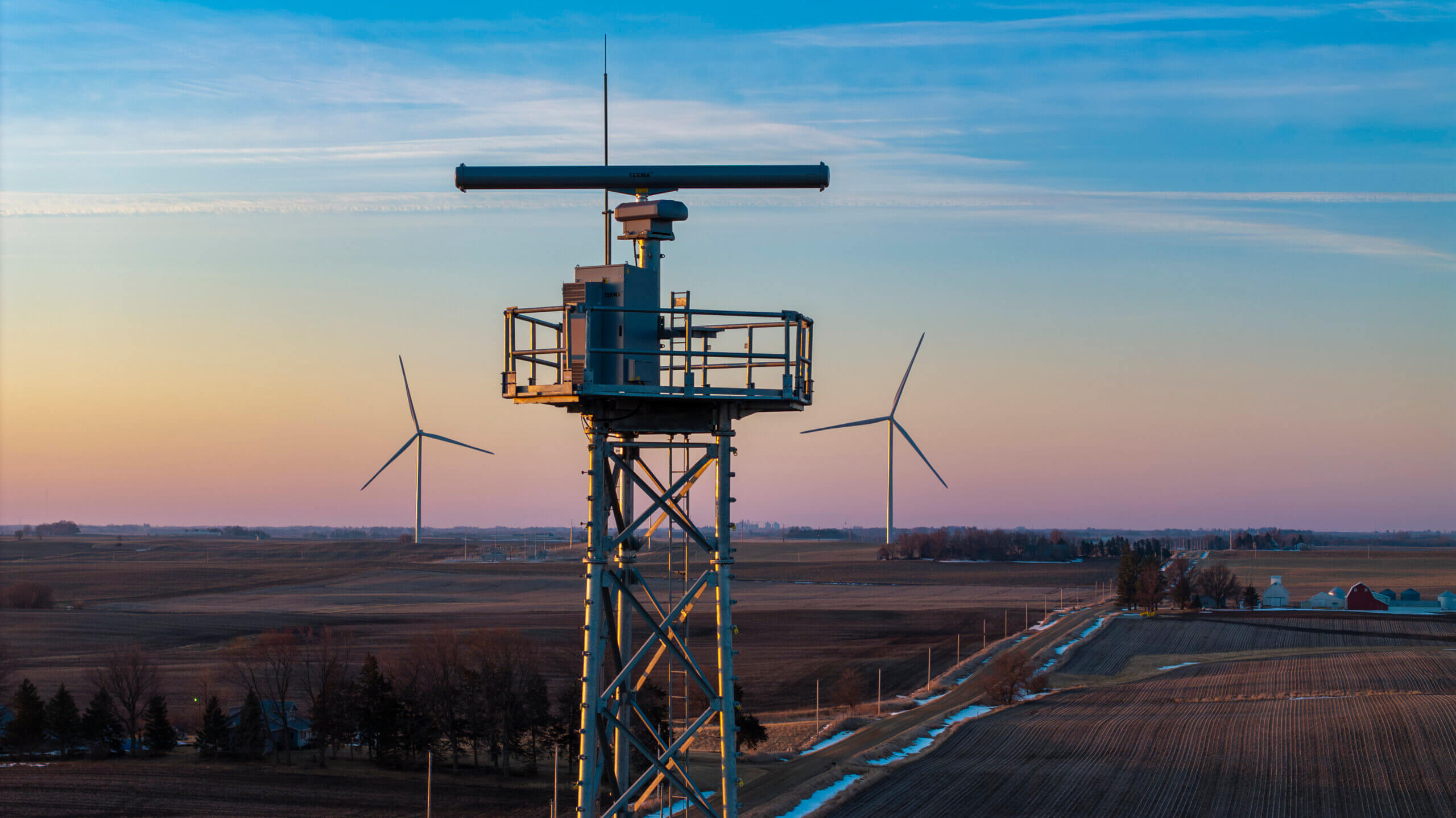
An Aircraft Detection Lighting System (ADLS) is a sensor-based system that uses radar to detect aircraft as they approach an obstruction or group of obstructions; these sensors automatically activate the appropriate obstruction lights until they are no longer needed by the aircraft. This technology reduces the impact of nighttime lighting on nearby communities by preventing lights from turning on unless an aircraft is approaching the facility.
How does ADLS technology work?
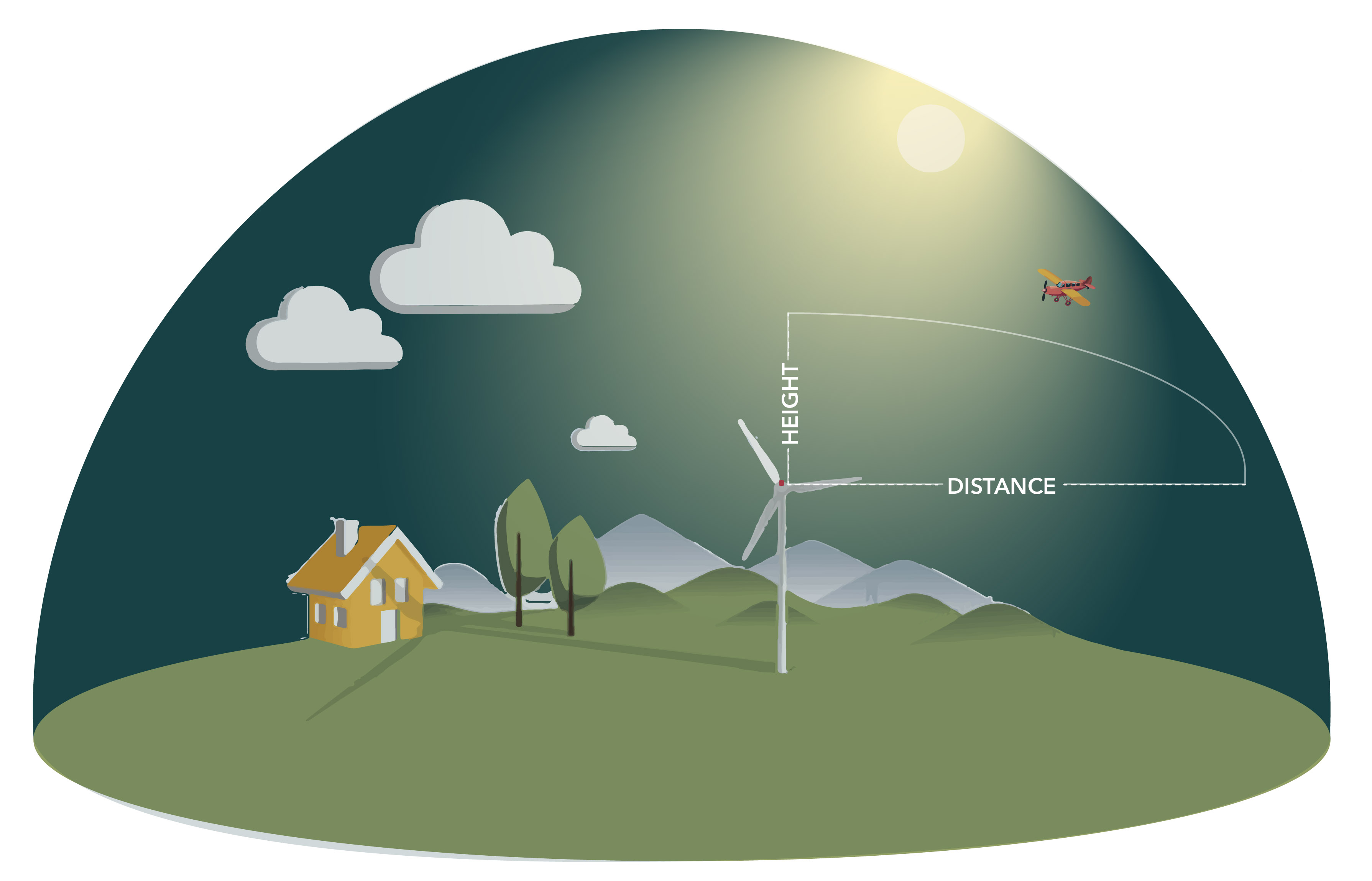
In simple terms, when aircraft approach the project area, the ADLS automatically turns the lights on. As soon as the aircraft move away, the lights turn off again. ADLS technology is designed to detect any aircraft that approach the area around the wind project—aircraft as small as one square meter. Lighting must be activated when aircraft approach the lighting area. This area is required to extend horizontally approximately 3.5 miles from the perimeter of the wind farm.2 The lighting area also extends vertically to 1,000 feet above the highest point of an obstruction (i.e., for a wind turbine with a total height of 500 feet, coverage must extend to 1,500 feet).
Current systems can detect aircraft in all directions and up to 16 miles away, long before they enter the required lighting area. Once an aircraft is detected, lights are activated until the aircraft exits the lighting area or for a pre-set amount of time, according to FAA guidance.
Can all wind projects use an ADLS?
Although ADLS technology has been approved by the FAA, each individual project must still be reviewed and approved by the agency. An ADLS plan may be modified or denied by the FAA based on proximity to airports, low-altitude flight routes, military training areas, or other areas of frequent flight activity.
Will ADLS start working right away when the wind farm is operational?
When an ADLS system is first installed, it goes through a calibration period to ensure it is operating correctly and identifying incoming aircraft effectively. This calibration period typically lasts about three months. Once complete, the full benefits of ADLS in decreasing the length of time the lights are on will be fully realized.
ADLS technology reduces the amount of time that turbines are lit by 96% to 98% compared to traditional FAA lighting.
