Wind Energy, Wildlife, and the Environment
Wind energy is one of the most environmentally friendly forms of electrical generation on the planet. That is because wind energy emits no air or water pollution, requires no mining or drilling for fuel, uses virtually no water, and creates no hazardous or radioactive waste. Clean, renewable wind energy also displaces harmful emissions from fossil fuel power plants and offsets carbon emissions, making it a safer generation option for people, wildlife, and natural ecosystems.
National Wildlife Organizations Support Wind Energy
According to the Audubon Society, responsibly planned clean energy will help protect birds from climate and pollution-related impacts.
“Audubon strongly supports properly sited wind power as a renewable energy source that helps reduce the threats posed to birds.”
To ensure that our projects are responsibly sited for wildlife, Apex conducts thorough environmental studies for every project. We coordinate with federal and state wildlife agencies to make sure that our projects are sited in areas where impacts to birds or bats are minimized and appropriately mitigated if necessary.
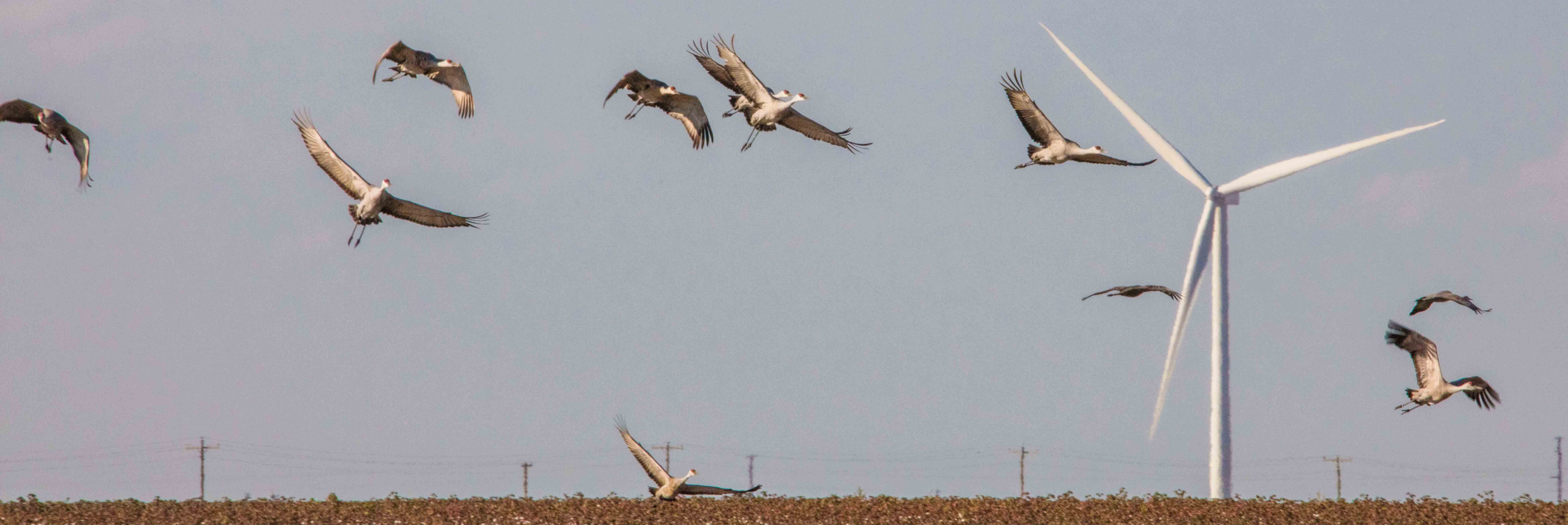
While birds do occasionally collide with turbine blades, modern wind farms are far less harmful to birds than buildings, communication towers, power lines, pesticides, and vehicles. In fact, turbines account for only a small fraction, about .0003% of all human-related bird deaths (3 out of every 10,000)1.
Through our Conservation Grant Program, Apex also partners with local and national conservation organizations to invest in the restoration of critical bird and bat habitat and ensure that our wind energy projects further benefit wildlife and can be part of the solution.
Wind Energy Has No Known Impact on Deer Population or Hunting
Just as the deer population adapts to construction of new homes, buildings, and other new sights and sounds near their habitats, deer also become accustomed to wind farms. It is not uncommon to find deer and other wildlife feeding or resting near the bases of turbines. Cattle, horses, goats, and other livestock are also 100% compatible with wind energy technology.
Protecting Bats and Their Habitat
Bats play an important role in local ecosystems, including consuming insects such as agricultural pests. The most serious threat facing bats in the U.S. is White-nose syndrome, a fungal disease that is estimated to have killed more than six million bats in North America.
Because wind farms can pose a collision risk for bats, Apex performs bat-specific studies during development to avoid and/or minimize potential impacts by siting turbines away from important habitat or areas where bats may concentrate. During operations, curtailment of turbine blades in low wind speeds also substantially reduces risks to bats of all species.